
A loose button falls off a shirt.
A toy wheel comes loose.
A picture frame gets scratched.
A favorite backpack develops a small tear.
A chair begins to wobble.
In a world where replacements can often be ordered within minutes, the first reaction may be simple:
Throw it away and buy another one.
But what if a broken object occasionally became something else?
A family project.
A creativity challenge.
A lesson in patience.
An opportunity to show children that something does not automatically become useless just because it is no longer perfect.
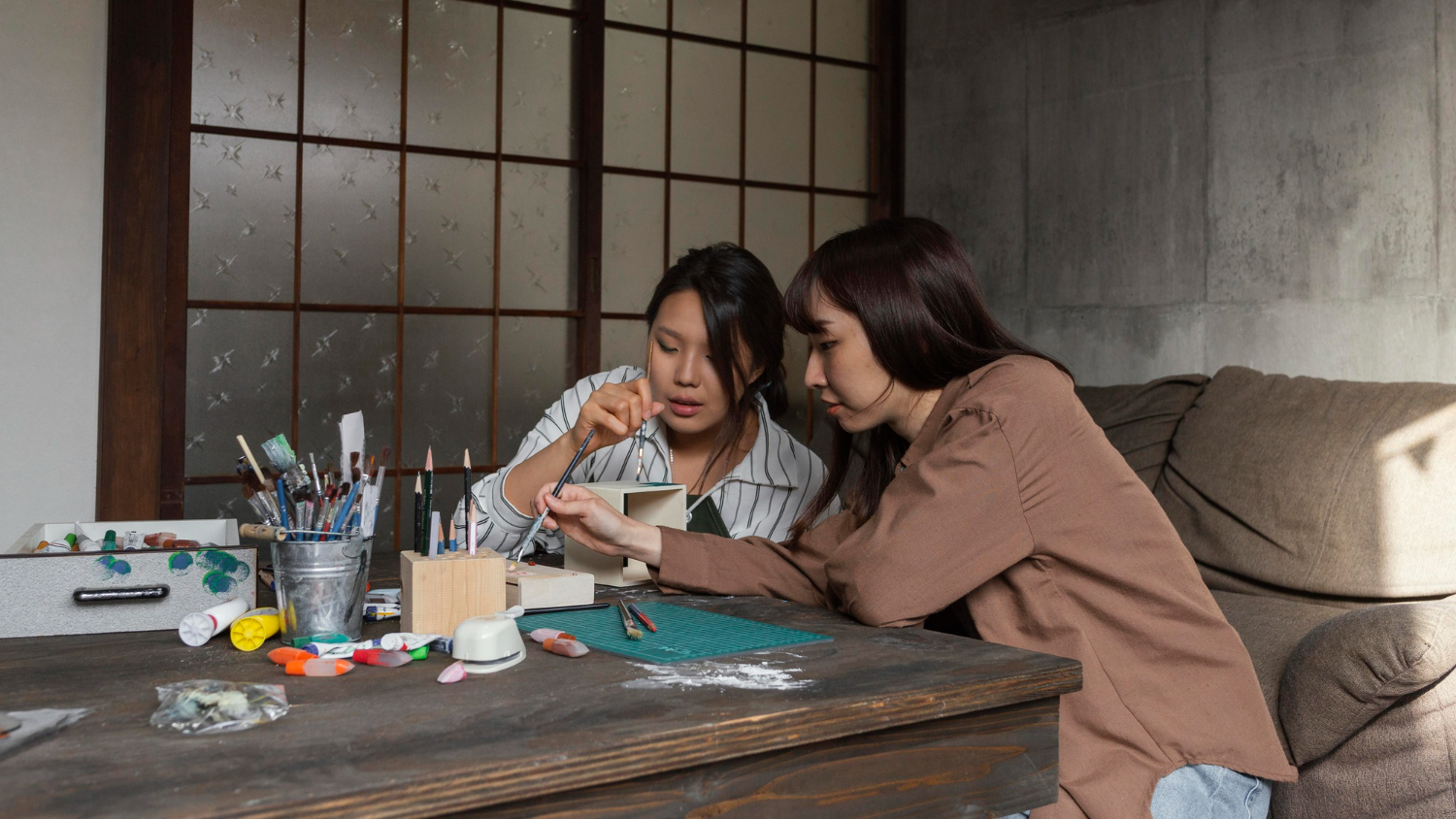
That is the idea behind a family fix-it night.
Set aside an occasional evening to gather a few damaged, worn, or outdated household objects and see what the family can repair, restore, decorate, or repurpose together.
You may save a little money and prevent useful things from being discarded unnecessarily.
But the bigger benefit may be what children learn while participating.
What Is a Family Fix-It Night?
A fix-it night is simply a designated time for dealing with small household items that need attention.
Throughout the month, you might set aside things such as:
- Clothing with loose buttons
- Small tears that can be sewn
- Toys needing simple repairs
- Scratched wooden objects
- Damaged books
- Loose cabinet handles
- Picture frames needing attention
- Bicycles requiring basic adjustments
- Decorations that could be refreshed
- Furniture that could use minor cosmetic work
Then, instead of treating these tasks as another set of chores, make an activity out of them.
Put on music.
Set out the supplies.
Give everyone an age-appropriate project.
Maybe make a snack.
The purpose is not to transform your home into a professional repair shop.
It is simply to practice the idea that before replacing something, it can be worth asking:
Can we fix this?
Create a “Fix-It Basket”
One reason minor repairs are ignored is that they appear at inconvenient times.
You notice the loose button when you are getting ready to leave.
You discover the broken toy while cleaning.
You see the scratched frame while walking through the room.
You intend to deal with it later.
Then you forget.
Create a basket, box, or designated shelf for repairable household items.
When something needs minor attention, put it there.
If it is too large, add a note describing the problem.
Your list might say:
- Tighten kitchen chair
- Touch up picture frame
- Repair backpack strap
- Glue loose decoration
- Replace toy wheel
Once every few weeks, bring out the basket.
Now you have a ready-made collection of family projects.
Let Children Investigate the Problem First
Before immediately showing a child how to repair something, ask:
“What do you think is wrong with it?”
That small question turns repair into problem-solving.
A toy car may not roll properly.
Why?
Perhaps a wheel is crooked.
Maybe something is caught in the axle.
Maybe one piece is loose.
Let your child inspect it.
Ask another question:
“What do you think we could try?”
Children may not know the correct solution, and that is fine.
The purpose is to develop the habit of investigating before giving up.
Repair introduces an important idea:
Problems can be examined.
Teach the Difference Between Broken and Finished
Children—and adults—can easily begin treating “damaged” and “worthless” as synonyms.
They are not.
A shirt with a missing button is still a shirt.
A scratched table is still a table.
A book with a loose page is still a book.
A bicycle with a flat tire is not necessarily a bicycle that needs replacing.
Learning this distinction encourages people to look at possessions differently.
Instead of asking:
“Is it perfect?”
They begin asking:
“Does it still work?”
and
“Can it work again?”
That shift can become a valuable part of sustainable living.
Start With Very Easy Repairs
A first fix-it night should not involve taking apart the washing machine.
Choose simple projects with a high chance of success.
Depending on the children’s ages and appropriate adult supervision, possibilities might include:
- Sewing on a button
- Patching a small fabric tear
- Gluing a loose craft item
- Tightening a simple screw
- Reattaching a toy component
- Reinforcing a damaged book cover
- Removing marks from a washable surface
- Replacing shoelaces
- Polishing a scratched wooden item
- Decorating a repaired container
Small successes build confidence.
A child who successfully repairs one object may begin looking at other damaged things with curiosity rather than assuming they belong in the trash.
Turn Repairs Into Creative Opportunities
Not every repaired object needs to look exactly the way it did before.
Sometimes the repair can become part of the design.
A patch can be colorful.
A chipped flowerpot can be painted.
A scratched storage box can receive a new pattern.
A damaged notebook can get a handmade cover.
A plain repaired jacket can gain decorative stitching.
A repaired object may end up becoming more personal than it was originally.
This is where fixing things begins crossing into art.
The question changes from:
“How can we hide the damage?”
to:
“How can we make this interesting?”
Try Visible Mending
Clothing repair does not always need to be invisible.
Visible mending intentionally makes the repaired section part of the garment’s appearance.
A patch might use contrasting fabric.
Stitching might form a small pattern.
A repaired hole might become a flower, star, geometric shape, or another design.
Older children can even choose how they want the repair to look.
This gives them creative ownership over the process.
A worn garment does not have to look new again.
It can become something different.
Let Children Choose the Colors
Children are much more likely to become invested in a project when they get to make creative decisions.
Suppose you are repairing an old wooden box.
Ask:
“What color should we make it?”
Or give them several safe decorative options.
Maybe they want stars.
Maybe stripes.
Maybe flowers.
Maybe something completely unexpected.
Allowing children to contribute turns restoration into collaboration rather than another adult-directed task.
Repair Can Teach Patience
Repair work rarely happens instantly.
Glue needs time to dry.
Paint requires another coat.
Thread may become tangled.
A screw may not line up immediately.
The first solution might not work.
This creates an opportunity to practice patience in a very practical way.
Children experience the difference between:
“It didn’t work immediately.”
and
“It can’t be fixed.”
Those are not the same thing.
Sometimes the solution requires another attempt.
That lesson applies far beyond household objects.
Normalize Making Mistakes
A family repair night should not be about performing every task perfectly.
A stitch may be crooked.
The paint may not be even.
The patch may look homemade.
That is okay.
Children can become reluctant to try practical or creative tasks when they believe the result must look professional.
Instead, focus on improvement.
Does the object work again?
Is it stronger?
Can it continue being used?
Did everyone learn something?
That is success.
Use Repairs to Explain How Things Work
Taking care of everyday objects creates natural opportunities for children to understand basic mechanics.
Why does a zipper move?
How does a screw hold two pieces together?
Why does glue need time to set?
Why does a bicycle tire need air?
Why does fabric tear?
How does a button stay attached?
You do not need to turn the evening into a formal science lesson.
Simply allow curiosity to guide the conversation.
Repair makes the design of ordinary objects visible.
Give Every Child an Age-Appropriate Role
A preschooler should not be handed power tools.
But younger children can still participate.
They might:
- Sort buttons
- Choose colors
- Hand an adult safe materials
- Wipe down an object before repair
- Help decorate
- Match pieces
- Hold a container
- Decide what the finished design should look like
Older children may gradually participate in more advanced tasks with suitable guidance.
The goal is participation, not putting children in charge of repairs beyond their abilities.
Make Safety Part of the Lesson
Knowing when not to repair something is just as important as knowing how to fix it.
Some projects require trained professionals.
Electrical problems, gas appliances, major structural damage, dangerous machinery, certain automotive repairs, damaged safety equipment, and other hazardous situations should not become casual family experiments.
Teach children that good problem-solving includes recognizing limits.
Sometimes the correct answer is:
“We can repair this ourselves.”
Sometimes it is:
“We need someone who knows how to do this safely.”
And sometimes:
“This item is no longer safe to use.”
Responsible repair is not about saving every object at any cost.
Create a Small Family Repair Kit
You do not need a workshop full of equipment.
A basic household repair kit might include appropriate items such as:
- Screwdrivers
- Measuring tape
- Fabric patches
- Needle and thread
- Spare buttons
- Fabric-safe adhesive
- Washable markers
- Craft supplies
- Sandpaper
- Small paintbrushes
- Appropriate glue
- Cleaning cloths
Store tools safely, especially around young children.
Add supplies gradually based on the kinds of repairs your household actually performs.
There is no need to purchase dozens of tools in anticipation of problems you may never have.
Use What You Already Have
A fix-it night should not become an excuse to purchase a huge collection of new craft supplies.
Look around first.
Old fabric can become patches.
Unused buttons can replace missing ones.
Leftover paint might refresh a small object.
Cardboard can reinforce a craft project.
A jar can hold hardware.
Ribbon from a previous gift may become decoration.
An old shirt might provide material for another repair.
Reusing supplies makes the activity itself more resourceful.
Create a Salvage Box
Some objects genuinely cannot be repaired.
Before throwing them away, consider whether any safe components could be useful for future crafts or repairs.
You might save:
- Buttons
- Ribbons
- Decorative fabric
- Beads
- Small containers
- Clean cardboard
- Craft wood
- Interesting paper
- Hardware
Be selective.
The goal is not to transform the house into permanent storage for everything that might hypothetically become useful.
Keep one small container.
When it is full, sort it before adding more.
Limits prevent reuse from becoming clutter.
Turn Old Containers Into New Storage
Containers are particularly easy to repurpose.
A sturdy jar might hold:
- Buttons
- Paintbrushes
- Craft supplies
- Pencils
- Small hardware
A decorated box might become:
- Toy storage
- Art supply storage
- A keepsake box
- A family memory box
Children can help redesign the container.
Now something ordinary becomes both useful and personal.
Try a “Repurpose Challenge”
Not everything needs to be restored to its original function.
Occasionally choose one safe item and challenge the family:
“What else could this become?”
A worn wooden crate might become a shelf.
An old jar could become a pencil holder.
A cardboard box could become part of a child’s imaginative play.
Scrap fabric could become a small pouch.
Old greeting cards might become gift tags.
The fun comes from seeing possibilities rather than following instructions perfectly.
Tell the Story Behind Older Objects
Repair can also become a doorway into family history.
Maybe the object belonged to a grandparent.
Perhaps it came from a memorable trip.
Maybe it was your child’s favorite toy when they were younger.
Instead of simply fixing the object, tell the story.
“Your grandmother gave us this.”
“We bought this on our first family vacation.”
“You carried this stuffed animal everywhere when you were three.”
Objects sometimes become meaningful because of the memories attached to them.
Repairing them can become a way of preserving those memories.
Bring Cultural Traditions Into the Activity
Different families and cultures have long traditions involving sewing, woodworking, pottery, weaving, embroidery, furniture restoration, quilting, and many other practical arts.
A family repair night can be an opportunity to explore those traditions.
Perhaps a relative knows how to sew.
Maybe a grandparent can demonstrate a technique.
Perhaps your family has a traditional craft that younger generations have never learned.
Invite someone to participate.
Practical skills can become a bridge between generations.
Let Grandparents or Older Relatives Teach
Many skills that once seemed ordinary are becoming less common.
A grandparent may know how to:
- Mend clothes
- Sew
- Repair furniture
- Restore an old photograph album
- Garden
- Sharpen tools
- Refinish wood
- Quilt
- Fix simple household objects
Ask them to show the children.
The result may be far more than a repaired item.
It can become a family memory.
Talk About Where Things Come From
Repair offers a natural opportunity to discuss consumption without frightening or lecturing children.
You can explain that products require materials, energy, transportation, labor, packaging, and resources before they reach a store.
Throwing something away and replacing it creates another cycle.
That does not mean families should never buy new things.
Sometimes replacement is necessary or more practical.
The goal is simply to teach that objects do not appear magically on shelves.
They have a history before we purchase them and an environmental impact after we discard them.
Celebrate the Finished Repairs
At the end of the night, put everything together.
Look at the before-and-after results.
Ask each person:
“What did you fix?”
“What was difficult?”
“What worked?”
“What would you do differently next time?”
Children may be surprisingly proud of an imperfect repaired object because they helped rescue it.
Take a picture if you like.
You might even keep a small family album showing things you have repaired or transformed.
Keep a “Saved” Count
If your children enjoy numbers or challenges, keep track of how many items the family gives another useful life.
Not how much money you saved.
Not how perfect the repairs look.
Simply how many objects were kept in use.
January: 4 items.
February: 7.
March: 3.
Over a year, the number may become surprisingly large.
It gives children a visible way to understand how small choices accumulate.
Don’t Repair Things You Don’t Actually Need
There is an important exception.
Sometimes an object is sitting unused because nobody wants it.
Repairing something does not automatically make keeping it worthwhile.
If you fix an unwanted item only to place it back into storage for another five years, you have not necessarily solved much.
After repairing something, ask:
Are we going to use this?
If not, perhaps it can be responsibly donated, passed along, sold, repurposed, or recycled where appropriate.
Repair should extend useful life, not simply extend clutter.
Make Buying New a Deliberate Choice
Sometimes the family will examine something and decide replacement is the better option.
That is fine.
A child’s shoes may be completely worn out.
A damaged product may no longer be safe.
A repair may cost more than replacement.
An appliance may have reached the end of its practical life.
The point is not:
“Never buy anything new.”
The better habit is:
“Before we buy another one, let’s understand why this one needs replacing.”
That turns replacement into a decision rather than an automatic reaction.
One Evening Can Teach Several Lessons
A family fix-it night may look like a simple household activity.
But underneath it are lessons about:
Creativity: There may be more than one solution.
Patience: Problems are not always solved immediately.
Responsibility: Our possessions last longer when we care for them.
Sustainability: Extending the life of useful things can reduce waste.
Confidence: Children can learn practical skills.
Culture: Traditional crafts and skills can be passed between generations.
Family: Working together creates shared experiences.
You do not need to explain every lesson out loud.
Children often learn them simply by participating.
Start With One Broken Thing
You do not need to wait until you have an entire basket.
Find one simple object around your home that needs attention.
A loose button.
A scratched box.
A torn book cover.
A toy that needs a minor repair.
Bring the family together and ask:
“Should we see if we can fix it?”
That question encourages a way of thinking that extends far beyond the object in front of you.
Something can be worn without being worthless.
Something can be damaged without being finished.
Something old can still become useful, beautiful, or meaningful again.
Sometimes living a little greener and raising creative, resourceful children can begin with something as ordinary as deciding not to throw a broken thing away just yet.